
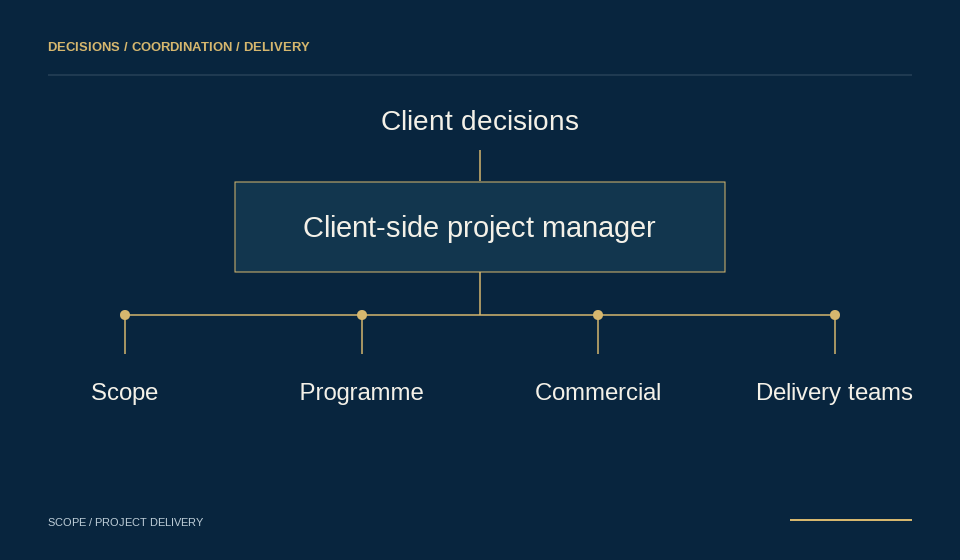
A client-side project manager coordinates the delivery work on behalf of the project client.
The appointment connects the client’s requirements with the programme, contractors, costs and decisions needed during delivery. The exact authority comes from the written appointment and project contracts.
For a landlord, that might mean managing a refurbishment alongside several trades. For an engineering business, it might involve coordinating equipment delivery with access, shutdown and commissioning requirements.
Start with the client’s requirements
The first task is to establish what the client needs to receive. A completion date alone does not define a project.
Record the intended use, the work included and the evidence needed for acceptance. Identify exclusions and assumptions before they become disagreements.
For a commercial refurbishment, the requirements might include operational access, agreed finishes and working services at handover. For equipment delivery, they might include installation readiness, operator training and the required documentation.
Give every deliverable an owner and a route for approval. This becomes the basis for planning and contractor coordination.
Connect the programme to the work
A project programme needs to show the sequence of activities and the dependencies between them. Include design information, procurement, access, installation, inspections and handover.
Check which dates depend on client decisions. Record when information is needed and who must provide it.
A weekly review should establish what finished, what can start and what is blocking progress. Ask for evidence where a completion statement affects the next contractor.
If the remaining work changes, review the forecast completion date. Keep the agreed baseline available so the change remains visible.
Coordinate contractors and client decisions
Contractors need agreed interfaces. An installation team may need access, isolation, lifting arrangements and approved information before work starts.
The client-side project manager brings those interfaces into the delivery review. Actions should identify an owner, a required date and the evidence needed to close them.
Client decisions also need dates. A late material selection can delay procurement and alter the construction sequence.
Set out the decision, available options, programme effects and cost information. Escalate it to the person with authority to decide.
The contract and supplier management service explains how these interfaces can form part of an appointment.
Maintain a current view of cost and change
Cost reporting should distinguish the budget from the expected final cost. Include paid costs, outstanding commitments and remaining work.
A proposed change needs a record of its scope, reason, price basis and programme effect. Follow the notice and approval process in the actual contract.
A verbal instruction may leave the parties with different understandings. Keep the decision and supporting records together.
Agree how unresolved changes appear in the forecast. The client should be able to see what is approved and what remains uncertain.
Our project budget guide includes a worked forecast example.
Define the relationship with other appointments
A contractor’s delivery responsibilities and a consultant’s management role need to be explicit. Technical approvals, valuations and certificates require the appropriate authority.
Appointing a project manager does not automatically transfer statutory client duties. Principal designer and principal contractor roles require separate consideration.
For construction clients, the HSE publishes guidance on appointments and client responsibilities. Review it for your project and seek specific advice where needed.
Within the project team, write down who can instruct work, approve changes and accept deliverables. Provide that information to the people receiving instructions.
Choose the timing and scope of the appointment
Early involvement allows management input before major commitments. A consultant can review scope, procurement dates and client approval arrangements during planning.
A live project may need a narrower initial review. Establish the current evidence before agreeing ongoing management responsibilities.
Useful questions for a proposal include:
- Which stages and workstreams will the consultant manage?
- What decisions remain with the client?
- Which meetings and site visits are included?
- What reports, registers and handover records will be provided?
- What information must the client and contractors supply?
- How will additional work be agreed?
For projects in Hartlepool and the North East, include location and attendance requirements in your enquiry.
Specify the first management outputs
A proportionate starting pack might contain a scope statement, milestone programme, responsibility matrix and cost position.
Add a current risk register, change record and action list. The content should match the project’s complexity.
For a small refurbishment, these records can be concise. Multiple suppliers or operational interfaces may require more detailed coordination.
Ask the proposed project manager to explain how these records connect to site reviews and decisions. Agree the reporting frequency and the process for urgent issues.
SCOPE offers project management consultancy for a defined stage or an agreed project lifecycle.
Further reading
Discuss the support required for your project.
Project management consultancy