
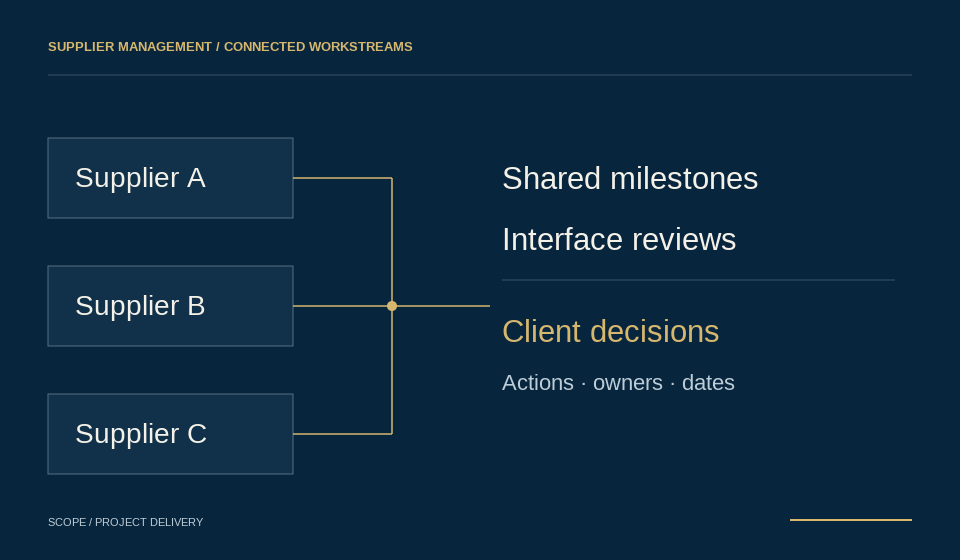
Contractor coordination starts with the interfaces between the agreed scopes.
A supplier may be ready to deliver while the installation area remains unavailable. Another contractor may need information that nobody has been assigned to provide.
A management arrangement needs to expose these dependencies, follow up commitments and record decisions. This guide covers practical coordination; legal interpretation and formal disputes require appropriate specialist advice.
Map the deliverables and interfaces
List each party’s deliverables, exclusions, information needs and agreed milestones. Check the contract documents and appointment records.
Build an interface schedule around where responsibilities meet. Record who provides access, utilities, drawings, permits, lifting arrangements and completion evidence.
For an illustrative equipment installation, the supplier may provide the machine and commissioning support. The client may separately appoint the contractor preparing the base and services.
The delivery programme needs to show when those preparatory works are required. Resolve overlaps or gaps with the relevant parties before the installation window.
Record obligations and authority
Create a tracker for the dates and deliverables requiring active follow-up. Each entry should identify the source requirement and responsible party.
Agree who can issue instructions, approve costs and accept work. Provide the decision route to the people administering the project.
A coordination meeting does not automatically authorise changes to a contract. Record whether an item is an action, a request or an approved instruction.
Some notices may require specific forms, recipients or timing. Check the actual contract and obtain specialist advice where its meaning is uncertain.
Keep management records aligned with those formal processes.
Run a delivery review with current evidence
Use a repeatable agenda. Review completed work, the next work period, constraints, information requirements and client decisions.
Ask each party to confirm what is complete and what remains. Evidence could include inspection records, delivery confirmations or agreed progress measures.
Record actions with one accountable owner and a required date. Agree what evidence will close the action.
Review missed commitments during the next meeting. Identify the effect on dependent activities and escalate unresolved matters through the agreed route.
Keep the meeting record concise enough for the delivery parties to use.
Use a short look-ahead linked to the programme
A look-ahead converts upcoming programme activities into readiness questions. It should identify the constraints preventing work from starting.
Check labour, materials, access, information, approvals and predecessor activities. Agree who will remove each constraint and when.
An activity can have a planned date while remaining unready. Mark that condition and review its effect on the programme.
For a refurbishment, several trades may need the same area. Confirm the sequence and working arrangements with those managing the construction work.
For engineering installations, use the checks in our installation readiness guide.
Manage a proposed change through to a decision
Give each proposed change a reference. Record the requested work, reason, source and status.
Ask for the information needed to assess price, programme and delivery effects. Identify assumptions and interactions with other work packages.
Send the proposal to the authorised decision-maker through the agreed process. Record approval, rejection or any further information required.
After approval, update the relevant scope, commitment and programme records. Communicate the change to affected parties.
Keep pending changes visible in the completion forecast using an explained reporting basis.
Escalate performance issues with evidence
Record the commitment, current position and effect on delivery. Distinguish the immediate constraint from the underlying cause.
A missed installation date may involve late information, unavailable access, supplier capacity or several linked causes. Review the evidence with the parties concerned.
Ask for a practical response covering the remaining work, resources and revised dates. Assess its effects on the wider programme.
Escalate through the agreed client and contract routes where decisions or specialist input are needed. Keep formal correspondence with the project records.
Where several workstreams have drifted, consider a defined project recovery review.
Coordinate completion and supplier closeout
Set out the required closeout documents early. Include the acceptance requirements relevant to each contract and work package.
Maintain a tracker for tests, operating information, training, warranties and outstanding work. Assign the party supplying each item.
Confirm who reviews the evidence and who has authority to accept the deliverable. Record unresolved items and the process for closing them.
Plan the interfaces between construction completion, commissioning and operational use. A supplier finishing its own scope may leave dependent client activities outstanding.
Define the management service you need
Contract and supplier management support can focus on an obligation tracker, a difficult interface or ongoing coordination.
For a proposal, provide the main scopes, contract arrangements, milestones and current issues. Identify the decisions and authority that remain with the client.
Agree the meetings, records, reporting and attendance to be included. Confirm where legal, technical or commercial specialist appointments are required.
SCOPE provides contract and supplier management consultancy from Hartlepool. Discuss your project requirements before defining the appointment.
Discuss the support required for your project.
Contract and supplier management consultancy