
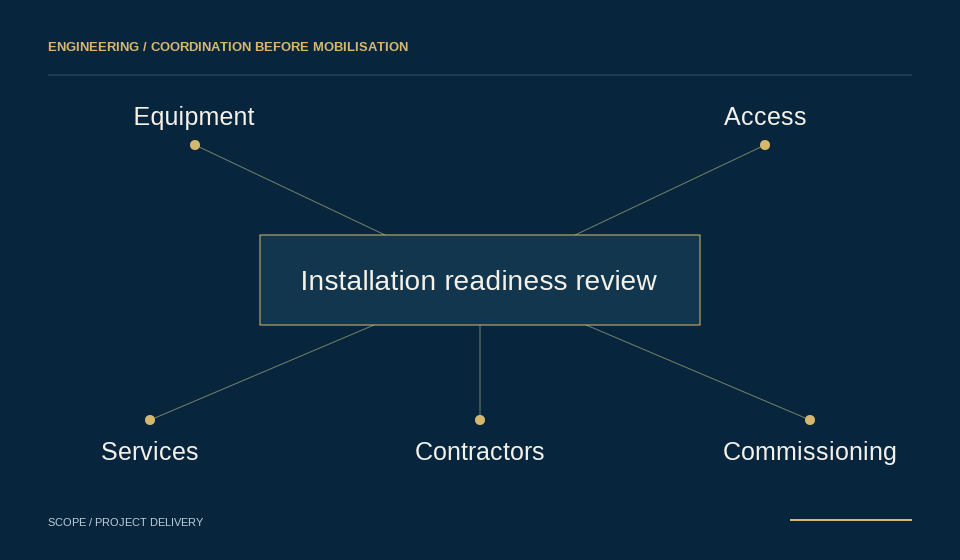
An equipment delivery date needs to connect with the readiness of the receiving site.
The delivery plan should identify the information, access, services and appointments needed before installation and commissioning.
This guide covers management coordination. Design decisions, lifting arrangements, isolation, permits and technical acceptance require the appropriately appointed people and procedures.
Define the installation boundary
Record what the equipment supplier provides and what the client must arrange separately. Include installation, connection, testing, training and documentation.
Identify the boundary with existing systems. Confirm who supplies drawings, verifies interfaces and approves the technical information.
Document exclusions and assumptions in the scope records. Assign unresolved questions to the appropriate technical or commercial owner.
The project programme should identify when each answer is needed. A late interface decision can affect procurement and site preparation.
Build readiness checks into the programme
Create readiness gates before mobilisation, delivery, installation and commissioning. Define what evidence each gate requires.
For an illustrative production equipment installation, the receiving area may need completed preparatory works and approved connection information. The exact requirements depend on the equipment and site.
Link each readiness item to an owner and required date. Record dependencies on other contractors, site operations and client approvals.
Review the evidence before confirming the next stage. An unresolved item needs an explicit decision through the authorised route.
Coordinate delivery and access arrangements
Confirm delivery dimensions, receiving requirements, access routes and storage arrangements with the relevant parties.
Identify restrictions such as operating hours, shared access, shutdown windows and adjacent work. Record the information needed by the appointed delivery and installation teams.
Specialist plans and safety arrangements need review through the appropriate site procedures. The project manager coordinates the dates and interfaces for those reviews.
Check the consequence of a missed delivery window. Include alternative arrangements and decision dates where these need agreement.
Track procurement and information together
A purchase order milestone does not show the whole delivery position. Track the information and approvals supporting manufacture and site preparation.
Record supplier documents, client review dates and outstanding comments. Confirm which information can be used for the next activity.
Where information changes, identify affected work and equipment. Route the change through the agreed technical and commercial processes.
Use a current document or information register with clear status labels. Delivery parties need to know which version is authorised for their work.
Our supplier management service can include these coordination records within an agreed appointment.
Plan the installation and commissioning interfaces
Agree the sequence with the installation parties and those responsible for site operations. Identify prerequisites for each activity.
Check the dates for required inspections, testing, technical support and commissioning resources. Confirm who witnesses and accepts the evidence.
Plan documentation alongside physical work. Operating information, test records and training requirements can affect readiness for use.
Separate the supplier’s completed scope from the client’s operational acceptance requirements. Assign each interface to an identified owner.
A client-side project management appointment should define the coordination authority involved.
Review costs and risks before commitments move
Keep the installation forecast aligned with the current programme. Include agreed commitments, uncommitted work and explained allowances.
A revised access date can affect storage, specialist attendance and other time-related costs. Review these effects before agreeing the delivery response.
Maintain a risk register for unresolved delivery conditions. Record the cause, possible effect, response, owner and review date.
Connect risk actions with programme activities and procurement decisions. Check whether the action has removed the uncertainty or needs further work.
For cost structure, see our completion forecast guide.
Use a readiness review before mobilisation
A readiness review can bring the remaining prerequisites into one record. Invite the parties able to confirm them.
- Approved scope and installation interfaces
- Required technical information and authorised revisions
- Receiving area, access and storage arrangements
- Preparatory works and service interfaces
- Relevant site procedures and specialist approvals
- Confirmed people, equipment and supplier attendance
- Inspection, commissioning and handover requirements
- Open actions, owners and decision dates
Record the basis for proceeding and any conditions. Decisions remain with the people holding the relevant authority.
Define management support for the installation
Some projects need a review before committing to mobilisation. Others need ongoing programme, supplier and site-interface coordination.
For a proposal, provide the equipment scope, delivery date, site location and current readiness position. Include the appointments already made.
SCOPE provides engineering project management consultancy alongside the client’s appointed technical specialists.
We are based in Hartlepool and discuss requirements across the North East. Contact SCOPE to agree the support, deliverables and attendance required.
Further reading
Discuss the support required for your project.
Engineering project management support